Featured

Stretching too far

The recent incident of Indigo reminds us of the need for exercising caution and restraint in running an operation in a factory or in a service sector like Airlines. In such a lifeline of an industry, the risk assessment needs to be far more vigilant and awareness of risk mitigation procedures. A business turning a blind eye is vulnerable in the long run. A CEO cannot work only to please the promoters and investors.

We had seen earlier that Sahara,Jet Airways and King Fisher got into different version of risk and the basic reason for their failures was a poor assessment of debt servicing and greedy promoters. ‘One cannot eat more than that can be chewed’ is an apt proverb that describes these case studies that made the lenders and investors poor with liabilities and litigations. Another glaring case study is the failure of Future retail group that borrowed more than it could re-pay and the business didn’t anticipate the risk of a new selling model – on-line sales that Amazon & FlipKart pioneered in India. The boards of these companies ignored their role in protecting the investors and customers and fell prey to the hypes surrounding the short lived successes of these airlines. The watch dogs of the government, the regulating bodies,turned other side and let the promoters have their own ways. The control mechanism woefully failed.

Another recent case study is that of Byju that was among the pioneers in online tutoring model but fell short of preference solely due to it becoming financially unviable and a loss making start-up venture. High profile advertising, heavy expansion across the country and the low cost competition aping the model.

An operation in a factory or a service line is capable of with standing a certain limit with a tolerance factor and stretching it both on financial and humanitarian fronts is inviting big trouble that cannot be undone overnight and calls for rebuilding absorbing the fianancial loss and losing the goodwill of customers.

#safety

#riskassessment

#operationalsafety

Featured

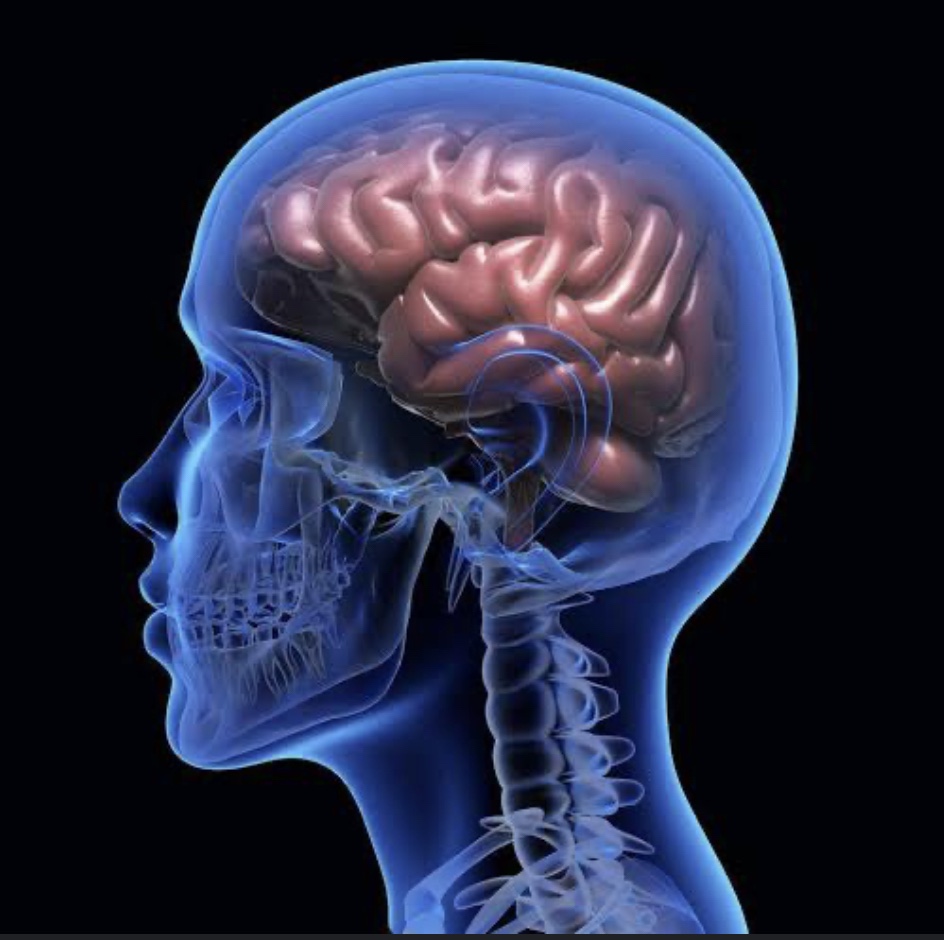
Resistance to change – how our brain works

If we want to take to a new habit or a new routine or a new home, our brain doesn’t accept it for some days because it is used to the same way of doing things. It offers resistance when we change our habit or routine.

We are used to wearing our watches on the left hand and when we move it to the right, we feel it weighs more. We want to switch it back immediately to our usual hand. But when we keep wearing it on the right hand for some days, the brain accepts it and we no longer feel it weighs more.

Similarly we are used to do our morning walk on the streets we are familiar with. When we change to a new route, our brain doesn’t feel comfortable for a few days.

Any new habit or routine takes time to get used to.

Achievers, as they say, do things differently to be successful.

Watch this interesting clip on how we need to embrace change from the routine.

#newhabits

#brainfunction

https://lnkd.in/enkgv-FV

Featured

Rural India – what it needs besides income generation

I don’t know if there is an index like Rural Improvement Index – RII or Ri2 index. I am also not aware of any Indian or state government agency tracking these metrics and taking corrective actions for a sustainable and happy living.

This index needs to define the following metrics and is published as a score of x/10. The coordinating agency must work with individual government initiatives addressing these important aspects rural population and rural India. The mass migration of rural youths migrating to bigger towns and cities must be arrested for a better balance of opportunities and economic progress.

*Health – Reach, infra and affordability

*Education – Relevance, Vocational curriculum and affordability

*Jobs – New jobs, employability and geo relevance

*Entrepreneurship – growth areas, financial assistance and mentorship

*Governance – People friendly, optimal resource utilization, Merit focused

*Sustainability – Preservation of wet lands, water sources and forests

Featured

Perspectives – there is no right or wrong.

It is all about perspectives that shape the opinions of people. Every action or complaint has two versions of perspective – one of the doer and the other of the onlooker. The justifications of action or complaint determine if the action was right or wrong.

Example: an interesting forward in my WA feed. Source unknown. But beautifully put across….

One Story, Two Perspectives

A famous book writer sat in his study. He took out his pen and began to write:

“Last year, I had surgery to remove gallstones. I was bedridden for a long time.

In the same year, I turned 60 and was retired … quitting a company that I loved so much. I had to leave the job I’ve been doing for 35 years.

That same year I was abandoned by my beloved mother who passed away.

Then, still in the same year, my son failed his final medical exam because of a car accident. Repair costs from the car damage marked the peak of bad luck last year.”

At the end he wrote:
“What, what a bad year!”

The writer’s wife entered the room and found her husband who was sad and pensive. From behind, the wife saw the husband’s writing. Slowly she backed away and left the room.

15 minutes later she came back in and put down a piece of paper with the following words:

“Last year, my husband finally managed to get rid of his gallbladder which had been making his stomach hurt for years.

That same year, I am grateful that my husband was able to retire in a healthy and happy state of mind & body. I thank God he was given the opportunity to work and earn for 35 years to support our family.

Now, my husband can spend more of his time writing, which has always been his hobby.

In the same year, my 95 year old mother-in-law, without any pain, returned to God in peace.

And still in the same year, God protected our son from harm in a terrible car accident. Our car was seriously damaged by the accident, but my son survived without any serious injuries.”

In the last sentence his wife wrote:
“Last year was a year full of extraordinary blessings from God, and we spent it full of wonder and gratitude.”

The writer smiled with emotion, and warm tears flowed down his cheeks. He was grateful for a different point of view for every event he had gone through the past year. A different perspective of the same events now made him joyful.

Dear Family and Friends, in this life we ​​must understand that it is not happiness or joy that makes us grateful. It is gratitude that makes us happy/joyful! Let’s practise seeing events from a positive point of view and keep envy away from our hearts.

”We can complain because rose bushes have thorns, or rejoice because thorn bushes have roses.”
Abraham Lincoln

Good to re-read this piece even though you may have read it before.

Have a nice day 😊😊😊

Image courtesy: Silaii.com

Featured

How much enough is enough?

We keep multiplying wealth all the time. It is very rare that people don’t have this habit. We always feel so insecure in both our career and profession, we tend to think far ahead about us and our children. Additionally we have the fear that our life is unstable as countries go to war, calamities strike nature, people protest and diseases are on the rise.

Many of us have heard about Maslow’s hierarchy of needs that has 5 stages starting from Psychological needs followed by safety, love & belonging, esteem and self-actualisation needs. But over the years researchers added another need as you could see from this below research report.

“In the time since Maslow published his original paper, his idea that we go through five specific stages hasn’t always been supported by research. In a 2011 study of human needs across cultures, researchers Louis Tay and Ed Diener looked at data from over 60,000 participants in over 120 different countries. They assessed six needs similar to Maslow’s: basic needs (similar to physiological needs), safety, love, pride and respect (similar to esteem needs), mastery, and autonomy. They found meeting these needs was indeed linked to well-being. In particular, having basic needs met was linked to people’s overall assessment of their lives, and feeling positive emotions was linked to meeting the needs of feeling loved and respected.”

When all these needs are taken of,what makes people to accumulate wealth more than they need in their life time or in the life time of next generations. We used to hear in villages about wealthy people that they have accumulated wealth for 7 generations.

In a country like India where per capita income is not as high as some western countries, the income doesn’t get distributed to the needy or there are no avenues to make that per capita income higher. We don’t have to follow communist mind set to distribute wealth equally but resources cannot be cornered by people who are already wealthy and they have to be made available to every citizen rather than the super rich ( businessmen, politicians etc) going on the crazy path of wealth accumulation.

To get back to the topic’ enough is enough’, how do we develop a mind to say No to further wealth creation. Will that erode our confidence or create a sense of contentment? Will the mind refuse entitlement and let go to others? Will it diminish our superiority in the society? Will it make us less powerful and authoritative?

It is not only we develop this attitude of ‘enough is enough’ but inculcate it to younger generations because they are the ones who are poised to create a world that is peaceful and orderly.

‘Enough is enough’ needs to go deep rooted in our minds.

#enoughisenough

#wealthdistribution

#hierarchyofneeds

* https://www.thoughtco.com/maslows-hierarchy-of-needs-4582571

Featured

Scientific prowess needs to take over the management mindset

Not a correct statement, one would think.

Let us think about the Indian context. We spend 0.64% of GDP on R&D. This speaks volumes of our apathy towards deep research, innovation and IP creation. We are no way comparable to China, Japan, US and Israel.

We are so engrossed in creating managers for today and tomorrow but have failed to recognise the fact that science is a fundamental factor to succeed as a nation or a super power. We have had enough of managers and let us focus / spend more on science and scientific efforts. Young minds have to be prepared towards research and innovation for the future. Academicians and parents have a responsibility to encourage students to opt for science curricula.

Thankfully the crave for Information technology engineers have vaned in the last few years at the engineering institutes and attention is turning towards more enrolment in core engineering and science subjects.

Corporates on the other hand are not spending enough on science or creating / supporting more scientific bodies that propel R&D efforts to a different level to compete with other superpowers.

We have progressed well in space and defence technologies but going slow on medical research, agricultural research, live stock research, health care research etc. Government bodies like CSIR, DRDO, ICMR, ICAR, NRDC, NIBMG have to step up on the pedal with the support of big corporates.

The whole world has moved towards AI and lacking in fundamental research and R&D initiatives will only retard our adoption to AI in every sphere of industrial automation and innovation.

Featured

Our habits are shaped by corporates

Frequently, younger generations caution us that our diets lack sufficient protein, which can compromise our muscle and bone health, causing premature aging.

Nonetheless, our eating habits are shaped by corporate entities seeking to promote their products. Surveys, often unsupported by credible health organizations, exaggerate mineral deficiencies in our diets. These findings benefit Ready-to-Eat and Food Supplement manufacturers, who exploit our concerns to boost sales.

The trend of kitchenless homes and the abundance of dining establishments threaten our tradition of home-cooked meals. Although our eating habits may seem to have changed, we are, in fact, consuming the same traditional foods.

The fashion industry has skillfully engineered our preferences, creating a cycle of consumption fueled by emotional appeals. It is vital to scrutinize advertisements and surveys, recognizing the potential for manipulation.

Featured

Surviving is not the same as Succeeding

You have been at a place for many years and always lament that you are not getting noticed. At the same time, you also see some of your colleagues who have been with you for a long time get the boot. You wonder what is this and why you are not pushed to the exit.

Managers hunt for associates who are warming the seats with no real hunger to meet the timelines and not being creative to solve problems. It is not out of sympathy you did not get pushed to the exit but inadvertently you may have shown sparkles of brilliance or hard work at times and that have helped you in good stead.

Are you happy at what you are doing and feeling you are just surviving?

This is the question that comes to the minds of many and they are at cross roads where to go and what to do.

Survival doesn’t take you anywhere in your career and it makes you to blunt all your skills. One needs to be at the top of the game to remain relevant in the organisation. Sharpening the skills, adding more to your skill set and a lot of self motivation helps you to get noticed and that is the sure way to move up. If you are finding it hard to self-motivate and mend the flaws in your system do seek a good mentor to nudge you to be always sharp and to possess a mindset to seize opportunities.

The bottom line is never be content with surviving each day. It requires a huge commitment and consistently hard work to succeed.

Survival blunts the skills, Success sharpen them!

Without ‘U’, sUccess never happens.

Featured

The Tariff Trades

A tariff negotiation is like a ping pong game. The more spin and force you use, the more will be the counter actions.

Global trade today is similar to the barter trade between countries. A country imports goods that it cannot make. The same country exports goods that it has in abundance. In olden days it used to be ‘goods for goods’ based on a notional value and that’s how trade had flourished over the centuries. Today tariff on goods of another country is used by countries as a tool to buy their goods.

Let us look at what governments want. They want the best possible landed prices for their products to make them affordable to the consuming public. In a tariff game, you want to import what is not available or could not be made within the country.

A country cannot make a product or produce an agricultural commodity overnight as many factors come into play – raw materials, skilled labour, technology or weather. No company wants to get into that segment that has high dependency on these factors and has a long period of ROI. Businesses weigh pros and cons and take decisions that are viable in their balance sheets. Nationality sentiments do not play any part unless they do business for charity.

If a country does not remain in a comfort zone of imports and exports with another country , it evaluates alternate markets for their country made products or help the local manufacturers to make their products that are competitively priced for exports.

Better sense starts prevailing when the industry bodies caution the governments on tariff rates that impact the local market and purchasing power of people.

Let us not forget that it is the people who finally determine the tariff rates because they only know how much is there in their wallets. Governments must listen to them to keep the vote bank intact.

A news item says ‘ Americans are going to pay each $ 1200 extra annually once the new tariff comes into effect’

#tariffwar

#tradewar

Featured

An Indian IT major is cutting down 12000 jobs soon

This is a major business news item that impacts the sentiments of the bourses as well as the IT outsourcing industry. We are used to seeing similar headlines from multinationals of Bay Area, NA but this news coming out of TxS is a shocker as we haven’t heard such a mass retrenchment in Indian tech / IT industry.

The impact of new emerging technologies, more so AI, is being felt in a big way across the entire industry spectrum not limited to IT industry alone. The technology is rapidly forcing organisations to have a fresh look at what would be the downside of their business with the focus now being solely on how to keep the workforce employable and billable.

Re-skilling is inevitable both for the employers and employees as they need to co-exist in an environment that is changing faster than that was anticipated a few years ago.

Bain projects that India’s AI industry will generate 2.3 million jobs by 2027. However, the talent pool is estimated to reach just 1.2 million—leaving over a million positions to be filled through upskilling and training initiatives. Specialists with 10-12 years of experience in Java or Python are no longer needed and young engineers with AI skills are much preferred.

More skills are turning out to be redundant and that’s where the IT organisations are grappled with a dilemma of whether to lay-off associates or not. The most impacted areas is Infrastructure maintenance ( due to organisations moving to cloud), BPO (more automations are happening here) and mushrooming GCCs that have taken away the work from traditional IT companies.

Well, the bell is tied around the cat by TxS and it will definitely be followed by other majors. Another interesting phenomenon is that the retrenchment is aimed at senior and middle management cadres (meaning managers and senior managers) who are always hands-off from technology. Re-skilling them is a tough call as the cost of retaining them is huge. The bottom of the workforce pyramid is going to be still broader as the salary of middle or a senior manager takes care of more new juniors.

There is also a heavy pressure on organisations relying on IT outsourcing to Indian majors especially from NA, Canada and Europe. They too have an agenda to cut IT infra, application and outsourcing costs drastically as their business is also facing the shift in tech trends.

Once the darling of the bourses is on the verge of a big shake-up and the industries’ cutting down on new hires and the serving associates will hugely impact the unemployment scenario besides those passing out of engineering colleges. The recruitment model revolves around hiring young, self-taught engineers — even before they graduate.The entire educational supply chain would need a revamp to adjust with the changing tech trends.

#techtrends

#ai

#layoff

Featured

Separation – Voluntary & Involuntary

Separation from an organisation,once served for long, is an emotional act. But it is an action of one’s own volition that is planned for many months and executed. There is no remorse or pain when such a decision is taken.

Involuntary separation, meaning termination of employment , is the most painful and scary action for an individual who is so naive in not anticipating it. He or she has been so dumb and failed to notice the clues from a reporting manager or a trusted colleague.

If that day arrives, how does one react to it?

Would you go though all job postings on portals and click ‘ Apply now’ button? It doesn’t work with most recruiters as they are always flooded with such applications.

Would you activate your known network and ask for a referral? You will be asked many questions as to why you lost the job? Embarrassing questions that you may have to answer.

Would you think of your own start-up? Yes, if you have a good bank balance and have a wet towel wrapped around your tummy for some time. High risk. Your dependents also need to survive.

Would you choose a company that is willing to take you but at a much lower salary? No, it would take years or even decade to rebalance your spends with earnings.

One of the better ways is to market ‘YOU’ as a brand rather than an individual looking for any job.

  • Make the best use of the time ‘ in between jobs’, to aggressively self-market your visibility, competence and credentials.
  • Be active in social media like LinkedIn, professional forums and groups. Contribute your worth by sharing your experiences and competencies.
  • Take time to attend technical and professional workshops that enhance your resume.
  • Work on your resume to make it more attractive by engaging a good coach.
  • Seek mentorship / guidance and other renowned experts who may recommend you to their contacts.
  • Don’t rely on your old network or colleagues for a job and it is better to work with new influential contacts. Known contacts may invariably speak not in glowing terms about you but rather lowly. More harm than good.

Don’t take up ‘a’ job in a hurry but buy your time to land on a job that is worth waiting for. Exude confidence, that is a sure shot way to create opportunities for you.

Happy job hunting! ( and not a sad job break)

#jobhunt

#involuntaryseparation

#termination

#jobsearch

Featured

Successful yet lonely

It is alright one sets his or her goal to win everything – best marriage,best spouse, best house, best children, best holidays, best job, best salary and best boss ( unfortunately you can’t choose best parents).

You may or may not have got everything you wished for.

In that pursuit you burn all the energies, health, relationships, leisure etc but feel you are alone and surrounded by emptyness. Is it worth to set these goals?

At times, it is good to fail and the failure teaches you to be grounded. Hence accept it. There are people around you to build relationships with. Millionaires and billionaires are not made only with successes. They have tasted many faliures and came back on track after rectifying the faults.

Featured

The evolution of human potential

The evolution of human potential has been huge since the Stone Age. God created the same brain on every human and of the same size and structure.

So what has been the primary reason for a human to multiply the potential of his brain many times? Was it the biological reason? Was it the cultural capabilities that increased the intelligence, creativity or adaptability over time?

Stone Age human walked leaning the body forward and who taught him to walk straight today? It is his biological change that altered his personal trait. Ancient human understood sign language as that was the main mode of communicating with others. Over many thousands of centuries, he learnt to speak languages that had meaning and his cognitive abilities increased leaps and bounds. We then learnt to adapt to different environments from sub-zero temperature to a hot humid climate and took to different life styles. Civilisations, Technological advancements, cultural beliefs and social interactions have been making huge impact on humans in the way they used their brains for a better living and peaceful co-existence.

The advent of Artificial Intelligence has made humans think of exponentially increasing the human potential through new solutions and what we see today is a human with immense creativity, tools and highly trained brain power that thinks about the impossible tasks.

There is a great interplay between biological and cultural processes that constantly alters our thoughts and develops our intelligence and capabilities.

Featured

Great leaders make great decisions

A Decision is always based on circumstancial evidence and data points.

If the evidence and data points are wrong, decision goes wrong.

An average Leader relies on available material and makes a decision that goes wrong.

A great leader looks at the probability of decision going wrong with the available data points and sources. If it is high he seeks for more data.

The buck stops at the leader and he has no one to blame but himself when decisions go wrong.

There are many examples of well known organisations winding up because of poor decisions. They were supposedly led by competent CEOs but what made them to fail the organisations they were leading well until they started taking decisions that had put the company at risks.

There is no definite formula for success and it depends on intentions, resources, risks, execution and customer goodwill.

Of all the above, good intentions are what make a CEO / Leader great. Great organisations thrive for decades and they all have had great leaders.

Featured

Ethical Corruption

Is there really a way to do it?

Industrialists or businessmen who want to get things done with a Minister or a politician or a government employee often have the dilemma of whether to bribe or not. The conscience says No to it but unless it is done there is no way of a project or a payment or a work gets approved. A delay is a cost.

As a leader or CEO, how will we handle this situation?

There is a way you can be ethical and still please the person who demands it. Look around and solicit some sane advice from people in your circle as to what may please that person instead of cash bribe. Today every politician has many businesses or activities that require incomes or facilities. One of these outfits could be the beneficiary of this largesse.

No more ethical dilemma!

Featured

Categories of leaders

There are 4 types of leaders in Indian business:

Visionaries – they anticipate the industrial needs of country and expectations of people and set up industries that serve every common man- The founders of business empires, TATAs, Birlas, Godrejs…

Path breakers – they imagine big about the hidden potential of people and the country and bring them out to create revolution – Verghese Kurien, Dhirubai Ambani, M S Swaminathan, Walchand, Narayana Murthy, Sundaram Iyengar…

Super Managers – There is a long list of names in this category. They own businesses and head them too. They are largely entrepreneurs and still work as executives in their organisations. Mukesh Ambani, Gautam Adani, Bhavish Agarwal, Falguni Nayar, Lakshmi Mittal, Deepinder Goyal, Nithin Kamath, Dilip Sanghvi, Sridhar Vembu, Radha Vembu, Kiran Mazumdar Shaw, Radhakrishnan Damani..,,

Professionals – all those in public sector and private sector CEOs and MDs.

There is no dearth of leadership in India and hope it is leveraged more than what is being done now. We need their collective wisdom to achieve $5T economy sooner than we had planned for.

Featured

Confidence

Many people say someone or a group is over confident in pursuing an objective to its logical conclusion.

There is nothing like over confidence or under confidence in dictionary. Confidence denotes the ability to gather resources and skills to achieve an objective or a goal. The people who do it, know very well that they are capable of succeeding in their attempt. They believe they have the skills or expertise. For an outsider, evaluating an individual or a group to be confident or over confident is more due to a perception of strengths and weaknesses of people attempting a goal. Their perception may not be always correct yet they discourage any such attempt.

Confidence is belief and belief is an awareness of inner strength and to know what is possible or not. A student is always in top 5 in a class and if he or she believes she could be the top student in the class, then it is a belief of own ability. On the contrary if he or she is in the bottom 10 in a class, believing that he or she could top the class is said to be over confident by others.

Know your strength and skills before believing in your ability to succeed.

Confidence is always a positive feel and cultivating it helps in dealing with people the right way. It shouldn’t be construed as arrogance but plain belief in oneself.

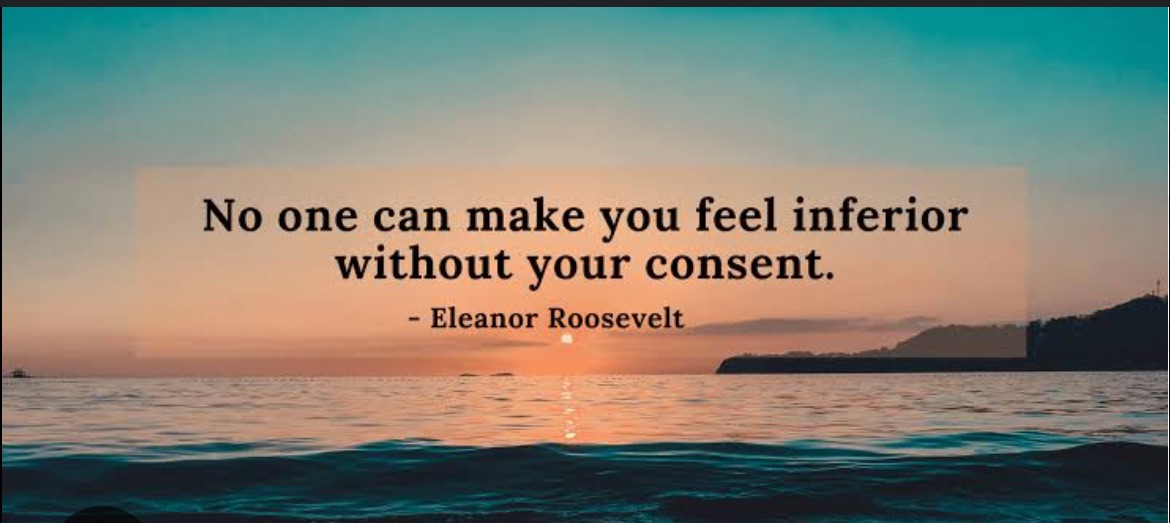
“No one can make you feel inferior without your consent” – Eleanor Roosevelt.

Featured

CIO & changing priorities

A CIO is no longer a person managing IT infrastructure, software applications deployment and keeping them running . The role today calls for closer involvement with the marketing team too. The customer feedback or competition provides a lot of data to the marketing team who in turn look upto CIO to slice and dice the data to re align their marketing strategy. The data is all about changing customer demographics, customer influencers, competition, income parity, cultural influence and pricing models. CIO needs to analyse these data and for this Data analytics is an essential tool.

Data analytics is crucial is for a business to survive and move forward. There are many software tools available to do this work and CIO would need experts to help them to analyse and interpret the data.

“Data analytics converts raw data into actionable insights. It includes a range of tools, technologies, and processes used to find trends and solve problems by using data. Data analytics can shape business processes, improve decision-making, and foster business growth”.

We,at Boardconnect India, help you in your efforts to achieve digital needs to grow and stay competitive.

http://www.boardconnectindia.com

#bci

#dataanalytics

#digitalttransformation

#digitaladvisory

Featured

Globalisation Today – 3 mega trends!

We have seen some decades in the past causing the world more harms in terms of economic and social disturbances. The decade of 2001-2010 was undoubtedly the one that derailed both social and economic worlds. We saw 9/11 attack that had sent the shivers down the world of what proportion the terrorism had reached as it plucked away so many innocent lives. Towards the end of that decade there was another catastrophe in the form of the Great Economic recession that left many jobless and countries had to suffer its aftermath for the next many years.

The decade that we are living in today,2020 onwards until this moment, has been the most dreaded and forgettable period. We are still in the middle of this decade and we shudder to think what lies ahead till 2030 and beyond. We had witnessed millions of people getting affected and losing their lives due to COVID. Further we are in the midst of two wars that don’t seem to be ending anytime soon and again millions have lost their lives and were displaced. The leaders of the nations have to be more responsible shedding away their intolerance to fellow mankind, embrace peace that will allow people to stay focused on living their life.

These happenings prove beyond doubt that technology has advanced to an extent that we could come up vaccine to arrest the loss of lives in a shorter period of time but the same technology has also made the warfare more dangerous than the previous world wars.

The slowdown of world trade that resulted from the financial crisis was exacerbated by protectionist policies and nationalist movements in recent years. The COVID-19 health crisis that brought economic collapse has prompted policymakers to take deliberate steps toward deglobalization. While the current trend is not likely to end globalization, some argue that “globalization can be reversed, at least partially.” ( Reference note # 2)

The social integration of people has been so rapid due to digital technologies but the economic integration of businesses or inter-trade between countries has somewhat diminished with countries becoming protectionists.

The UN says that there are three mega trends seen today that are related globalisation: shifts in production and labor markets, rapid advances in technology, and climate change. ( Reference note # 3)

The below mentioned notes are older but they seemed to be happening today.

Notes

1. KOF Swiss Economic Institute, Press release. KOF Globalisation Index: Weaker World Trade Slowing Globalisation External
October 23, 2019. Back to text

2. Douglas A. Irwin. The pandemic adds momentum to the deglobalization trend. External
Peterson Institute for International Economics. April 23, 2020. Back to text

3. United Nations General Assembly. Fulfilling the promise of globalization: advancing sustainable development in an interconnected world. Report of the Secretary-General. External
2017.

Trends in Globalization – Globalization: A Resource Guide – Research Guides at Library of Congress

Featured

What is ailing Indian education system?

The majority of students that come out of schools and colleges lack both in employable and social skills. The unemployed care a damn about social skills and they fall apart in a set-up that is responsible, compassionate and yielding. To destroy a country, it is enough to lower the quality of education by preparing the students only to write exams or allowing cheating in exams.

We have been discussing for a decade about how Indian educational system is short of practical aspects of learning and innovating and not broad based. The stake holders of education – students, teachers, parents, academia, industry bodies and Governments- have consistently failed to revamp the system to be in tune with technological and social necessities. The National Education Policy is attempting to bring in a semblance of equitable, inclusive and a holistic approach to primary and school education and the fruits of this initiative will take time to see the results.

How do we rectify the system so that it imparts skills that are relevant today and tomorrow? Many educationalists have elaborated on it but fundamentally what is preventing it to be accepted is those politicians with parochial interest and an hidden agenda. They don’t let the experts to do their job and attempt to dilute the curriculum with their own ideology. Secondly the teachers have to be brought upto speed to new methods of teaching rather than coaching students to ace the exams. They don’t get themselves updated with newer teaching methods and tools besides not knowing how to deal psychologically with students.

The education in future will be teacher centric and technology is going to play a huge role in shaping both teachers and students. The students need to have a growth mind set, curiosity, experimenting capability and risk taking attitude besides a making them to learn to accept failures.

Many agencies have to be drawn into the discussion / action with no interference from politicians manning the government. PTA, academic experts, technology experts, psychologists, industrial bodies, corporates have to come together in this mammoth effort. The future belongs to students of today and let us all participate to make them technocrats, scientists, professionals and social leaders with moral ethics and good work culture.

#educationfortomorrow

#qualityofeducation

Featured

Transformational Leadership

It is not about making wholesale changes in business or in a social venture or in a government. It is a step by step process that is well thought out for its impact and the changes it would bring in people and their actions. Any changes that would not contribute to positive change in status quo should be avoided as they would only create chaos and confusion.

The changes that are being planned are encapsulated in a larger program called Transformation and they could be in adapting best business practices, innovative culture, process automation, increasing people potential, inclusive, becoming more socially relevant and above all feeling pride in what people, organisation or country do.

The leaders driving these changes need to de aware of the change in the behavioural pattern of the people that are part of the exercise. The leaders have to push people towards peak performance without them knowing it or exerting pressure on them. The team needs to be always aligned with the goals and that leads them to give their best without expecting any huge rewards. The impact it has created is itself a reward as they find new motivation, enthusiasm and energy to deliver the results.

History has taught us such transformations have done wonders to great organisations and countries and the leaders that drove these transformations are still revered for their foresight, perseverance, objective and compassionate leadership.

Transformation has to be for the greater good of the society or organisation and not for petty, narrow minded attitude and actions that are disgrace to people leading it and are part of it.

Let us support all such efforts of leaders who thrive for uplifting the society and bring out the pride in what we do.

#transformationalleadership

Featured

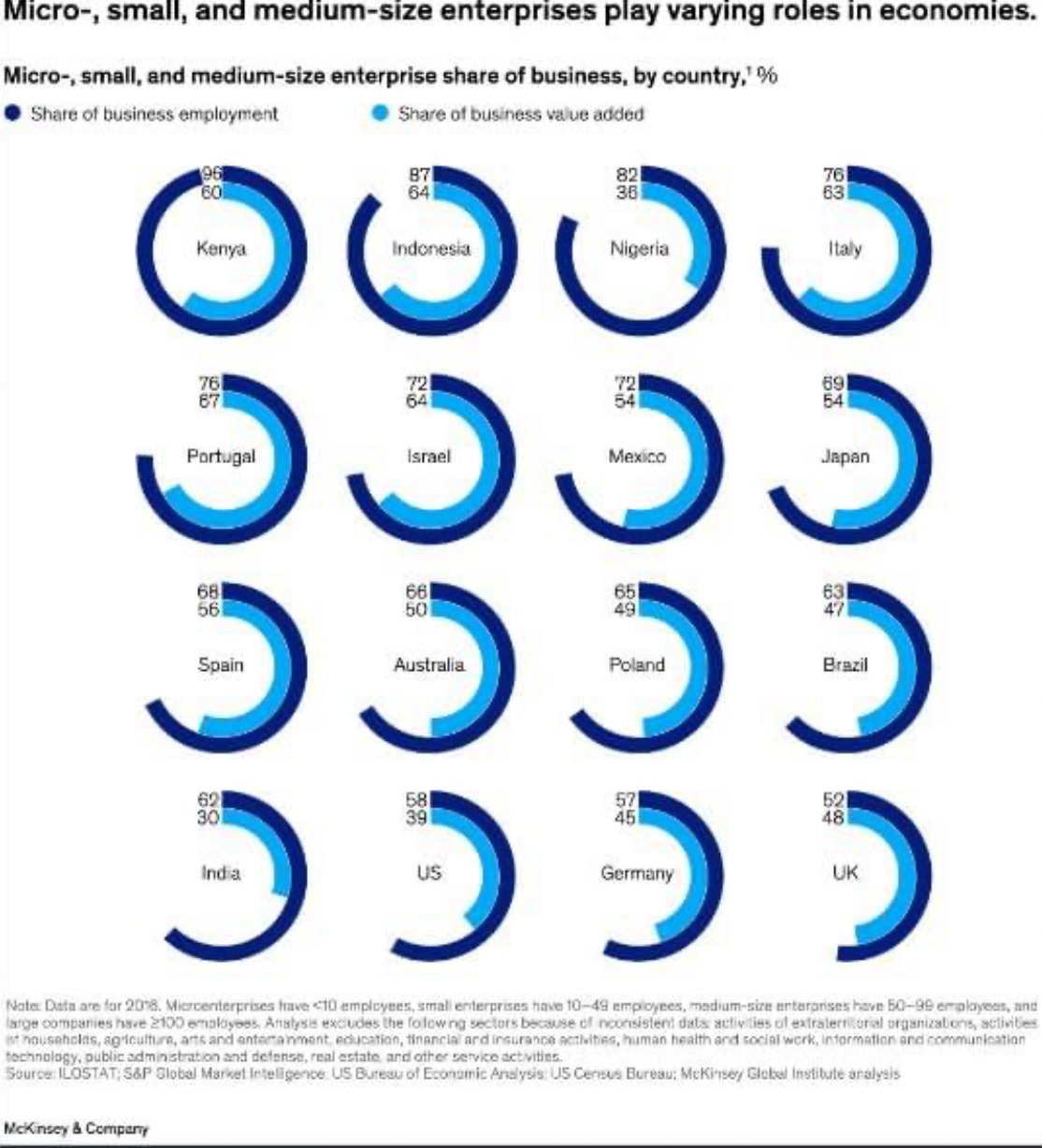
Why do we make average quality products in our MSME sector?

There is an interesting comparison that I received in my FB today about how we fare poorly compared to emerging economies in manufacturing quality products. This has been the bane of this sector and it may be one of the reasons that stifles the growth of this segment.

Let us see how do we compare with other nations:

Micro-, small, and medium-size enterprises (MSMEs) on average have only half the productivity of large companies, and less than that in emerging economies.

MSMEs’ economic and employment contributions in 16 countries account for more than half of global GDP. Their contributions relative to large businesses vary widely from country to country, but boosting the productivity of these categories of enterprises could substantially increase GDP, especially in emerging economies.

India has a long way to go in improving productivity. Stop chasing quantity but run after quality.

The picture attached here ( Courtesy: McKinsey&Company) is an excellence depiction of how we lack in producing quality products! MSMEs are born with sparks in the founders’ minds to create differentiated products or services for the consumers. The start seems to be always with good intention but down the line the pressure of growth, lack of funds and RoI assumes priorities and the quality suffers. ‘Chalta hi’ attitude at every stage of production or workmanship results in average quality.

Do you agree?

#excellenceinmanufacturing

#msme

#qualitynotquantity

Featured

What type of person are you ?

Do we ask this question to ourselves? Or did someone ask us this question?

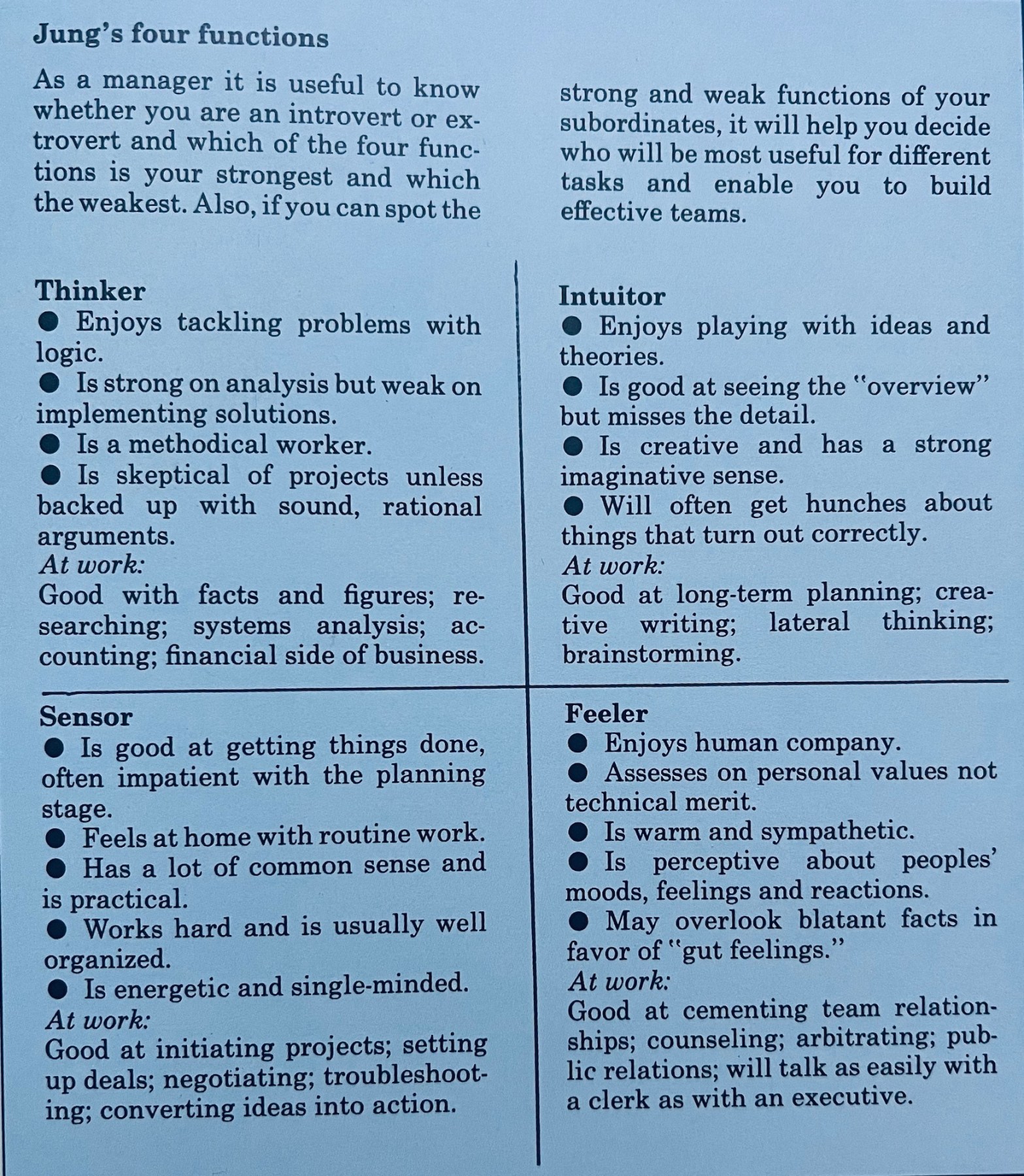
As managers, knowing ourselves is a challenge because we behave differently at different times both in the work place and at home. We are good at thinking and solving problems but not so good in handling people. Some of us handle people nicely, neither bossy nor appeasing. They act with tact and sensitivity to get things done.

Carl Jung, a management expert of the past century pioneered the study of personality types. He thought that people oriented themselves towards the world in two basic ways. “ Introverts” are most happy when they are by themselves, doing their own things; they do not pursue social activity and often feel uncomfortable in it. “Extroverts” give their lives meaning from interaction with people. They are depressed when left alone.

Human beings are complex and don’t fit into boxes. Jung advocated some theories, as a starting point to self – analysis. He defined four functions – Thinker, Intuitor, Sensor and Feeler . The four quadrants of the above picture explains the traits of these types of persons and where they could fit in the work place or society.

A leader could use these inputs to delegate the right type of work to people who fall into those categories and try to get the best out of them.

Featured

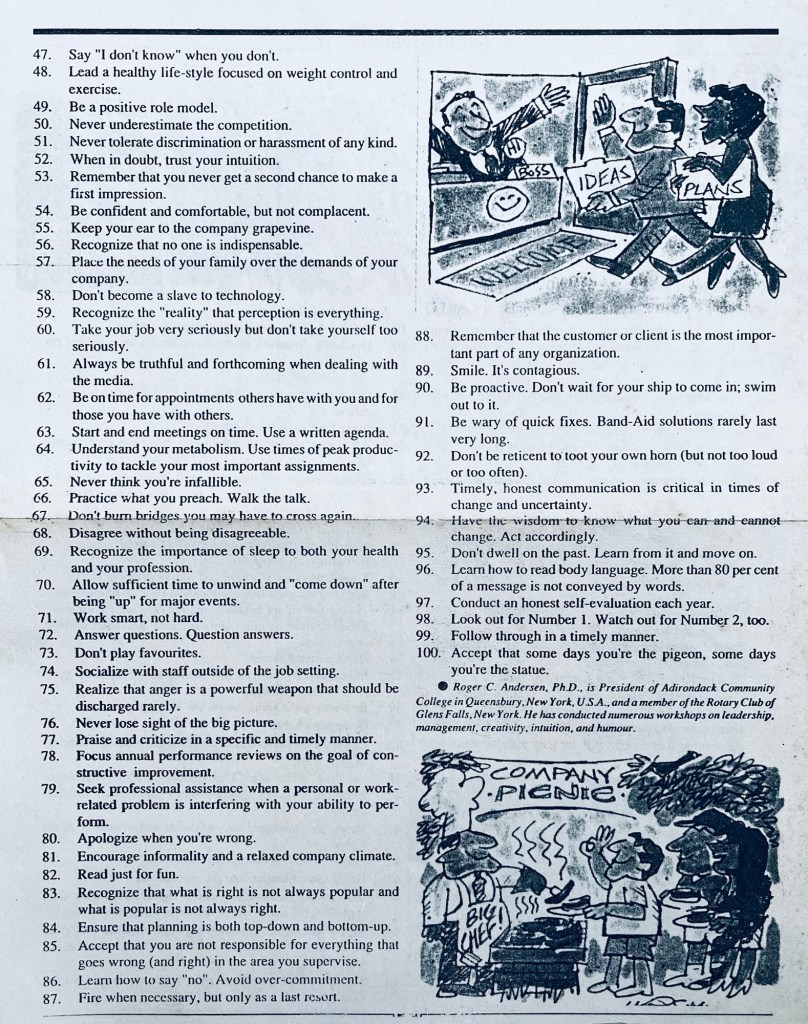
How to become a better manager and a boss?

A few decades ago, I read these 100 tips but not sure if I had practiced all of them. They apply at all the time and for all the managers. Surely many of them got into my head and stayed there without me taking any extra effort to remember when you had already imbibed them into your daily routine.

That’s how a manager or a boss stays on top of what is happening with his/ her business and people.

The author had indeed distilled the wisdom with his interactions with many professionals and given it here for our benefits.

#thehighperformancemanager

#highperformanceboss

#managerialtips

#howtoexcelasaboss

Featured

The Entrepreneurial trap

Entrepreneurship is a springboard for some to achieve great things as successful businessmen and is a trap for many to stay put where they had started, deeply engrossed in day to day mundane work that takes away their focus to stay and grow the business.

Most entrepreneurs don’t take help to push them out of their zone to know how are they doing and what they are doing is right or wrong. Entrepreneurial journey is not a short stint but a life long marathon that saps the energy, resources and family life. It requires great determination to stay rooted in the journey with unwavering motivation, a committed team and a supporting family.

Entrepreneurial burn-out is the most talked about syndrome in the start-up business world. One runs after money in the initial phase and later spends a lot of time in acquiring those first customers. Most of the entrepreneurs do pro-castination and fail to focus on productivity that is so essential to sustain their business.

Let us look at some of the tips from coaches that would help those running their business.

Flexibility

Businessmen are so engrossed with their day to day problems that they forget about their families and friends and think about only money. Too much focus on one issue becomes burdensome and there is no one to tell them to step out and get another perspective.

Procrastination

Some businessmen become obsessive and get bogged down about trivial administrative issues. They fail to notice other larger issues that are impacting their business that eventually derail it. They don’t know how to solve them.

Delegation

Entrepreneurs are keen to monitor everything on their own and spend a lot of time in doing it. Expanding their business and new customer acquisition get less attention. They fail to delegate routine jobs that don’t need their time and effort.

Automation

Move away from manual work of keeping accounts or calculating salaries for employees. Automation of tasks makes you organised and you find you have more time on hand to spend on business. Automation can be extended to your processes too. It may cost you more but benefits will repay the costs.

Handling debts

It is not right to deploy all your funds in the business. You have your family to take care of. Loans are essential to expand your business or for product development. Don’t shy away from taking a loan that can be managed and repaid on time. Accumulation of debts takes you towards huge cash outflows as interest payments and eventually that kills your business. Always keep the debts to a manageable level.

Books of accounts

It is a good habit to know from your accountant about the incomes / expenses, tax obligations, tax benefits and government notifications. Tracking your book of accounts once in a fortnight helps to avoid surprises at a later date.

Help from a coach / expert

It is not wrong to take guidance from coaches/ Experts to help with you inputs about the market, competition, strategies and your strong & weak areas. Sometime you forget the real value in you.

It is a great feeling to start a business but running it to earn good profits requires deep commitment, a good team, good understanding of customer expectations and a supportive family.

All the best !

#entrepreneurship

#entrepreneur

Featured

Work- Life Integration

Work -Life balance has given way to work – life integration. In the traditional way, we used set aside 8 hours for work, 8 hours for family & prayers and 8 hours for sleep & rest. This is a disciplined way of leading our life when we worked in a factory or an office. In the IT era , we worked without any boundary to our working hours, working with our laptops at the airports, cafeterias and even at home dining table.

This led to a new concept of work-life balance to enable we spend a good amount of time with the family. Work and life were made to look disconnected and there was a hard line separating them. Vacations were encouraged, family days were invented and weekend work was discouraged. In spite of these arrangements, were we able to switch off our minds totally from work? Physically we were with the family but mentally we were still at work. Didn’t we? Both employers and families didn’t seem to get the best out of this system. Boss was unhappy and wife/ kids / parents were unhappy too.

But did our ancestors follow this pattern? Somehow I feel they were more organised and seamlessly brought in work -life integration. Agreed, they were not running after money, their lives going at a leisurely pace and doing this way they accumulated wealth for their next generations.

How did they do?

They used to sit at the front porch speaking to family members and also instructing workers what they must do and where they need to go. Men travelled with family to attend to some functions and at the same time attend a court hearing or buy something for their farms. Women did the daily chores but were also planning for the years ahead and did what was needed for the elders, the children and the husband. The list goes on…

A new concept is now emerging – work -Life integration.

Work-life integration creates flow and harmony between all aspects of our life. Instead of separating work and home, responsibilities get done when they need to according to the schedule that fits us the best.

But work-life integration isn’t about finding a ‘perfect’ balance between work and life. It’s about finding a balance that works for you. It’ll look different for everyone and change over time as your circumstances change. The key is to create a balance that works for you and be flexible and adaptable.

Here are some tips:

Take your family along on a business trip

Have business meetings at far away places with spouses spending their time on their own or together.

Establish yoga center or walking clubs or Exercise spot that keep the minds and the body agile at the work place.

Have a flexible WFH or a part – time work schedule, not like the one we had during COVID that had a burn-out effect on people.

If the spouse or kid is unwell, do your work from home.

Prioritising & Delegation are important aspects of work-life integration. You just can’t do all the work yourself that keeps you occupied all the time with no time to family.

Keep your video calls or zoom meetings short in day to day work. You will find you have a lot of time on your hands that you could use for the family.

Conduct awareness programs to employees on work-life integration and how it will help them and families.

Working mothers have tough time to mange infants. Let them choose their own work hours that go with the child’s sleeping schedule.

The rewards of WLI is huge if planned well and followed by everyone at the office. You could manage attrition in a better way with more satisfied employees.

Go on and read this stuff:

https://www.betterup.com/blog/work-life-integration

There are loads of stuff and suggestions on this subject is available on the Internet. Choose the best approach that suits you if you are a leader in an organisation.

#worklifeintegration

#worklifebalance

Featured

The power of our voice

Most of us are indifferent to what is happening to others – injustice and discrimination. We get affected only when they happen to us. We don’t stand-up and voice our opinion or view when others go through a tough situation that seems to be out of prejudice, inequality, racial or communal view. As long as they don’t happen to us, we remain unperturbed and unsupportive to the affected persons.

We remain in oblivion and fail to establish the fairness in dealing with people. We don’t ask questions when discrimination happens in front of us. We don’t speak up and voice what is right and wrong.

A society becomes more aware of its duty when individuals become aware of their rights and obligations to that society that is essentially a collection of individuals.

The young minds in our midst need to be educated as to why they should stand up against unfairness. It starts at our home.

A video that has come up in my WA feed is a poignant reminder of what we are supposed to do and know how our voice could bring about changes in people and the Government.

#discrimination

#inequality

#injustice

#raiseyourvoice

Thanks to original maker of this video

Featured

Time-out

How often we use this gesture in our daily life, be it professional or family ? We have seen it happening in sports but that is to do with strategising the moves in an on-going game. The coach animatedly shouts down the ears of the players during these time-outs.

Do we use this technique if we get into a quarrel or argument with our partner or friend or colleague or parent?

It is an excellent way of calling a truce for sometime, think over on what caused the disagreement and later get into a chat in a calm manner. Some people gets into meditation after a time-out before resuming the discussion. It is important that a dialogue happens to appreciate the point of views and to put an end card to argument. In a team meeting too, this time-out technique could be used by the convenor of the meeting of groups when they are at each other’s throat.

After all we don’t want to hurt our partner or spouse or colleague 😊

Featured

Hack your own mind

Today the world talks more and more about hacking of personal data and company data compromising sensitive information that results in loss of trillion of dollars.

In a normal parlance, as we understand, the word ‘hack’ is related to hacking a network or a computer server. In a simpler term, it is stealing or changing the data through unauthorised access to a network of computer system. It is a punishable crime.

What if we decide to do an ethical act of hacking our own mind? It is a laudable action !

Our mind, over the years, has accumulated a lot of garbage that prevents us from performing to the best of our ability to think and act better. Plenty of stored unwanted data in our mind clutters our thinking process because these data about people, places and society not only harms our growth but others too. We always surround ourselves with negative vibes like jealousy, hatred, vindictiveness, pompous, demeaning behaviour, bad habits, unnecessary fear, bad addictions, strained relationships etc and they are the road blocks to our happiness and growth.

How do we do an ethical hacking of our mind?

* One can take a spiritual way of staying clear of unpleasant thoughts. Follow a person who can help achieve this objective.

* One can decide to watch and hear only good thoughts that cultivate friendliness, happiness and fairness.

* One can read books of stalwarts who inspired us. Their life stories carry a lot of information on how they achieved a pinnacle of status that we would want to emulate.

* One can take a renewed interest in people near and dear to you because a happier family of relatives and friends makes you to keep in mind their success, well being and happiness also.

* One can start devoting some hours to reach out to those who need a lot of help, empathy and compassion. Helping them to alleviate their sufferings in a small way makes you feel wonderful.

* One can start moving with a group of people who you find are like you but happier than you. Such a company of friends or people takes the burden of bad vibes off your shoulders and feels light and wanted.

* One can start praying to the Almighty, if you believe in Him, because prayers help to channelise our minds into good actions.

Well, there could be many other ways to hack your own mind and cleanse it to turn into a happy father or mother or son or daughter or spouse or friend or co-worker. You then become an ethical hacker of mind like all those renowned gurus and leaders.
Hacking of your mind is not a one time process but a continuous self-cleaning and self-healing process.

There are plenty of books available about Mind Hacking but you choose what is best for you to read and follow.

Happy Hacking !

Featured

Retirement – when is the right age and time?

We have read about young billionaires retiring early from active work and enjoying the sun set days that was advanced on their own volition.

A young billionaire with prudent investment decisions is assured of passive income that keeps the life going with not much change in life style.

We have also heard of wealthy individuals, though not in great numbers, turning into a spiritual or a philanthropic life spending their life earnings on poor people. That indeed is a laudable and noble achievement.

Could everyone aspire to be in any of the above categories? Definitely not.

How do we and when do we make that decision to retire from active work? There are some possible scenarios that look adequately safe to take that decision:

– you are in mid 30’s and you are left with a fortune in the form of real estate and stocks that could only swell year on year. The earnings keep you going as long as you are not a lavish spender.

– you have landed in a job due to your technical / business acumen and that you earn a high compensation. You work there for 12-15 years, save enough money with wise investment decisions and retirement year seems nearer when you are not avarice to earn more and more. Yours is a high pressure job that affects your health and you think of retirement . Your family fully supports you as your time is available to them all the time.

– you have worked for 25+ years, your children are in a position to take good care of themselves, saved enough money, created good assets but don’t want to continue in the high pressure work environment, has a liking towards travel with your spouse. Retirement is no problem for you.

– you are running your own business, have grown it to a reasonable size, created successor from within or outside the family to run the business, takes good returns from the business, finds it no longer exciting, takes a liking towards starting NGOs to help social causes. Retirement is not a hard decision for you.

– yours is a double engine run family of husband and wife with practically no commitments ( double income with no children, parents not with you). You have high savings that will sustain you for long years and hence retirement becomes a good option to take.

What could be other reasons or scenarios you think of ? Feel free to share your views.

#retirement

Featured

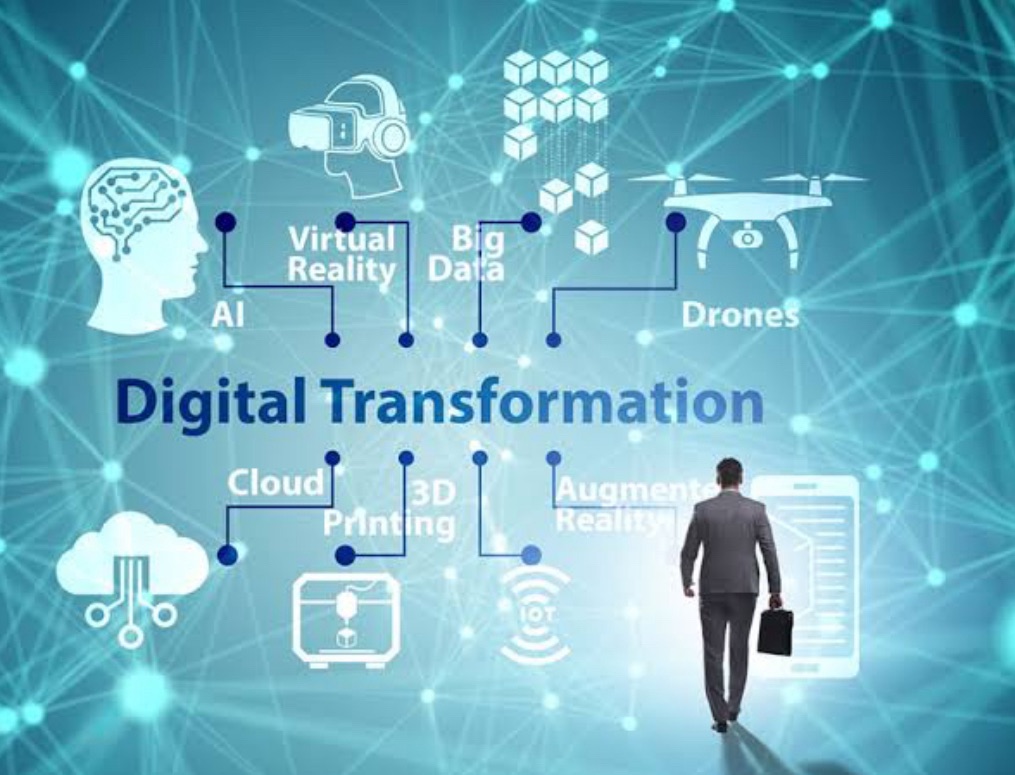
Digital Transformation

It is a catchall phrase these days for every business organisation, however small or large it may be. It is different from a Business Transformation initiative as it is not time bound and is a continuous exercise to become more agile, efficient and customer centric.

It is not an easy exercise to start unless the leadership of the organisation is clear about the following aspects:

  • ensuring the availability of business process knowledge upfront with documentation.
  • evolving a clear strategy to create a business value
  • assembling technical skills that work closely with the business teams
  • making available data about every aspect of the business – customers, vendors, products, markets, financials, machinery, infrastructure and competitors.
  • ensuring faster technology adoption or innovation that is best suited to the business.
  • driving the change management, frequently communicating with all the stakeholders and securing their buy-in.

Here is an interesting article about Digital Information ( courtesy: McKinsey & Company)

#digitaltransformation

https://www.mckinsey.com/featured-insights/mckinsey-explainers/what-is-digital-transformation

Featured

Every day is a Happy day

It is bewildering to see, we Indians, attach so much importance to a new year when we have seen so many new years in the past. Both good things and not so good things happen every year and it is how our lives go on. By welcoming a new year in such a grand style, we are not going to control what is going to happen. It is a legacy left over to us by Britishers. They invented a long week of celebrations following Christmas until the New year eve, because the cold winter needed a respite for people to come together. We feel happy to spend the new year eve, rejoicing and regaling with friends and families. Some people go to church or a temple to pray and a few others make resolutions to do some great things but do we need a new year day to pray or do good deeds. Good things are meant to be done all the time. Every day is a happy day, if we think so.

⁃ Sivakumar Gopal ( http://www.beating.in)

Featured

Power is the ability to influence others and not to dictate to them

Power of an individual or a leader or a politician is like a two sided weapon that could motivate or harm others.

We have seen how power corrupts leaders especially politicians when they constantly indulge in abusing it.

In a social set-up, many individuals make an impact with their empathy and compassion . People remember them for long for their good work and the positive vibes they create around them. They are like good Samaritans that jump in for the right cause and help bring in sanity in thoughts, discussions and actions. In our midst we see only a few people doing it and others are just happy to tag alongwith them. Why do many of us refrain from involving deeper for a social cause or justice and creating an impact ? Time may be a constraint but 24 hours in a day is too much to do any good. The fear of failure or criticism makes them not to attempt a more vigorous approach to a just cause. A society, community, organisation and Government need many such people who could make those positive contributions. That person could be heading a government, a social service leader, an actor, a saint or a preacher.

In a business organisation a leader has to exercise power that doesn’t drive away his team out of fear but that gives them stability and makes their realise self- worth.

Power is the ability to influence others and not to dictate to them. True power is not having to use it. Cultivating a mind set is difficult for many of us but the fruits of reaching that state of mind is enormous and fulfilling.

#power

#influence

#powerabuse

Featured

Sustainable Agricultural Practices – SAP

We see a lot of stuff being written about sustainable business practices across many industry verticals but we hardly see any concern towards safe and sustainable agricultural practices in an industry that is being harped as the lifeline of India.

We hardly see any concerted effort by India’s retail conglomerates, agricultural bodies or Governments towards improving organic farming output besides educating the farmers the need for them to practice sustainable practices in farming.

We hear the agricultural produce that we buy today have metals and chemicals beyond permissible quantities and is it not an utter neglect by the people who are responsible for safe food to citizens?

India’s top business houses that deal in agricultural products should set aside funds under CSR to help the farming community to be made aware of sustainable agricultural practices that would save our next generations and they will continue to get edible food besides this saving our land from turning into barren lands of rock and stones.

Here is a sneak preview of what we have failed to do until now and what needs to be done towards SAP. A good read.

https://tractorkarvan.com/blog/sustainable-agriculture-in-india

#sustainableagriculture

#saveourland

#savenaturalresources

Featured

Human Brain – the greatest symphony creator

Our brain is like a symphony creator. It creates notes to each sinew of the body and instructs how to perform. It is like a symphony creator hands out notes to each section of the orchestra – the players playing piano ,violins, cellos, flutes, trumpets, violas, brass, clarinets etc to play a symphony in unison. If an unsuitable note is handed out to a violinist or a trumpet player, the output is jarring. Similarly the brain also can send a wrong signal that results in imperfect limb movement or incoherent speech. Dementia, Alzheimer, Parkinson’s, Paralysis, all these happen because of brain’s malfunction and it’s notes going haywire. Our physical ailments or well-being not withstanding, it also sends signals that make our emotions erupt in a joyful or violent manner. It makes us to be kind to fellow humans and but also makes us to act in a cruel manner to cause harm to others.

How do we better take care of this wonderful symphony creator called brain?

We, as ordinary humans still don’t know ways to directly control our brain functions that activates our body parts. The brain functions in a normal way when each of our body part does what it is supposed to do. There is a perfect rhythm and sync in what it does. So keeping our body parts in prime condition is one way of helping our brain to continue doing its work. The following tips form renowned gurus and doctors make our body and mind to stay healthy. Let us try.

Eat moderately, eat right and on time

Exercise or walk or jog or run daily for 20-30 mts

Surround yourself with people having positive energy

Create more family time

Control anger and let go your ego and jealous

Mindfulness or meditation helps to recharge yourself

Believe in THE supreme power

We have come to this world to do what we are supposed to do and do it right.

Featured

What makes people to grow and excel?

We all know a Comparison is a measure of how others perceive about performances. We also know that Competition is a measure of what outsiders see about individuals, organisations or countries.

Analysts compare and conclude who is competing with whom and who is doing better than whom. It is not an exact measure of the what they think these companies or countries are capable of. It is a measure of a relative performance and they conclude with a limited data and information. It also reveals the perceived weakness that may not be correct.

For an individual or an organisation or a country, it may be a motivating factor that ranking helps them to know where do they stand in a competitive world. But it is not a defining factor. They know their capability and the opportunities in front of them and take a self-assessment of how these potentially are to be put into action to derive the maximum outcome.

  • An individual should realise his or her capability and how it needs to be enhanced to achieve the goal. A good mentor will help achieve that objective.
  • An organisation should dwelve on its capabilities and limitations that inhibit its growth and strive to work on them to improve its standing in the market place. A good strategy needs to be revolved that considers all aspects of business that grinder the growth.
  • A country needs to tap all its resources and channelise them to unleash its hidden potential to achieve progress. Implementation of policies and achieving outcomes must be the focus for the bureaucrats and ministers.

We don’t grow because others want us.
We grow at our own will and show the world that we have ‘it’ in us to excel. It is always the potential that we would want to showcase not the weakness. Great individuals, Famous organisations and Developed countries have demonstrated that nothing succeeds like the focus,determination and hard work.

Featured

Perils of Re-org

The most dreaded word in any organisation is Re-org. It sends shivers down the organisation pyramid. Usually a few select senior leaders with the help of an external consulting firm gets into this exercise and the outcome is either a great hit or a damn squib.

It may be noted that a business reorg due to a merger or acquisition is different from a structural & operational reorg of a running business.

There are multiple reasons why re-org is attempted by a CEO or the Board of Directors.

  • the organisation’s top line is not growing enough to keep pace with the industry growth. New opportunities are not pursued.
  • the CEO himself had just taken over with a mandate that a double digit growth needs to be assured. The first thing he attempts to do is an re-org.
  • there are too many senior leaders in the same role for many years and a sort of complacency or duplication of responsibilities has set-in that impacts the organisation’s performance.
  • the organisation is drifting away from
    being customer centric and long time customers are parting ways.
  • a new acquisition or merger has happened and a new org needs to be created to accommodate the executives of the acquired / merged entity.
  • the organisation has turned into a behemoth and is no longer nimble to absorb the changing technological trends and show consistent growth and profitability across all revenue streams.
  • a recent dent in the brand image of the business due to an internal operational issue or a market reaction or increasing customer complaints compels CEO to shuffle leaders.

If the re-org doesn’t produce the desired results, chaos sets in, leaders lose focus and the employees become a confused lot. Attrition happens fast and new hires are not on-boarding. The old org’s hang over and hierarchy still rule the day to day operations and the new org is unable to take complete control. Conflicts happen at all levels and customer interests are compromised. Revenue streams are juggled and sales teams are demotivated.

Reorg is mostly an organisation’s internal matter and when it fails, skeletons are out in the open and the blame game starts. A successful reorg exercise should clearly consider:

  • communicate, why reorg is needed
  • get the buy-in from all stake holders
  • define new responsibility matrix
  • name unit and sub-unit owners
  • lines of business to be dropped/added
  • new revenue streams
  • expected increase in top/bottom lines
  • customer retention strategy
  • internal and external threats to org
  • employee retention
  • revised competitive strategy
  • finally be empathetic to employees

A reorg helps some and disappoints many. So due care must be exercised before it is conceived and implemented.

#reorganisation #customerretention #employeeretention

Featured

Better planning and execution in Supply chain results in profits

Managing the constituents of a supply chain in a business is vital for achieving incremental profits. We usually focus on managing cost reduction in supply chain but never look at it as profit that could be measured at every stage – parts sourcing, conversion, value addition, packaging, logistics, inventory management and distribution. Each component contributes to incremental profit and the business owners of these components need to align with the overall objective of the organisation. If we think cost reduction in supply chain helps in keeping sale price constant to retain customers, then we don’t think of it as a profit. Is cost cut a holier word than profit? Not at all.

In a competitive market, it is an art to keep the sale price of a product constant to hold onto market share but keep increasing the profit as far as possible, in-spite of variations in input and conversion costs. The job of the cost accountant plays an important role in achieving this objective. How many companies have this dedicated role, especially smaller organisation where this responsibility still lies with the promoter. The costing team takes the feedback from sales team, sourcing team and manufacturing / subcontracting team to arrive at the optimum sale price of a product that can be sold in high volumes during both on-season and off-season. The cost accountant also keeps a tab on the operations running costs like energy, fuel, salaries, infra maintenance etc.

Sourcing – every business has more than one vendor for a part or service . Spreading the supply risk among them and helping them to manage their input costs is important to keep the purchase costs within limits. Low cost alternate materials in parts or assemblies help to keep the production cost in check. Making short term and long term forecasts using machine learning algorithms is vital for the business.

Conversion – at the manufacturing plant, parts get converted or assembled to make the final product. Any savings in operational steps or routing or reducing maintenance down time or value additions go a long way to reduce the cost of conversions.

Value addition – a specially made tool or machine at the suppliers’ place can be replaced with an in-house tool modified to do the same operation helps to negotiate better price from the supplier.

Inventory Management- Maximising profits by managing material holding cost, planning for surge in customer orders is an art. How much buffer is necessary for each raw material and each finished product is statistically analysed and planned.

Packaging – since the advent JIT concept, sub– assemblies or parts do not get packed if the supplier and buyer are situated close by. Re-usable packaging or Returnable packaging as in the case of barrels or moulded trays or wooden crates substantially reduce the packaging cost that results in incremental profit.

Logistics – it constitutes a good percentage of final price of the product and it is important to control this cost by deploying a fleet management system ( either own or sourced outside) that offers the lowest transportation cost per piece or tonne or Kg. Again JIT concept helped in increasing the efficiency of logistics. The 3rd party logistics companies are a boon as part loads of parts or final products are shipped at reduced cost.

Distribution – the most horrendous part of supply chain and distribution is making available the products at the retailers’ shelves or meeting JIT deadlines. There needs to be a logical method of distribution based on past consumption history, prior knowledge of principals’ production quantities, planning for weather uncertainties and social disturbances. Demand forecast at the retail end is again done using supply chain planning softwares and analysing volumes of data to know the purchasing pattern and peak demand points in distribution network.

Today we have many softwares that help in integrated business planning, sales & operations planning, demand forecasts, inventory optimisation and response / lead time calculations. Choose a software that fits your business needs for the best supply chain planning and execution strategies.

#sapibp

#netsuite

#oraclescm

#precoro

#anaplan

#sapscm

#netstock

#microsoft365scm

Featured

Is Digital still a buzz word ?

‘Digital’ continues to be a buzz word for both IT and non IT companies for more than 5-6 decades. In fact when the first semi conductor chip was invented ( in 1958), we had also transitioned from analog to digital in every sphere of our life – in appliances, electronic instruments, computers, space vehicles, automobiles ( remember your first Casio digital watch?) etc.

We still talk about digital revolution in business and in our day to day life and haven’t yet found an alternate word. Frankly speaking, Digital experience has seemlessly merged with our life long ago and it is not a differentiator today. It is no longer fancy to brag that we do digital transformations.

It is good to note AI and ChatGPT are taking the world by storm but these are not new either. They are surely huge improvements of previous inventions that are already in use.

Today the challenge lies in how we integrate different technologies and platforms and what new use cases we could develop that will make our lives much easier. As we make our lives easier we get more time to invent newer technologies and that’s how the cycle of inventions and deployment goes on.

Human intelligence makes Artificial Intelligence more powerful. Our responsibility lies in limiting its use and not harm humans and the mother nature.

#digitalbusinesstransformation #artificial-intelligence #human-intelligence

Featured

It’s all about me…

We want to be loved, valued or appreciated. That’s a common nature of a human.

We always expect appreciations or likes for what we do or say. Because they keep us happy. The more we expect such accolades, the more we tend to be egoistic and there is a haughtiness that sets in us leading to total disregard of how we want to see others around us. We feel angry when those surrounding us don’t appreciate us.

We feel elated to be surrounded by people, who believe that as long as they keep praising our actions and words, they will get our favours. This sycophancy over a period, assumes a larger proportion to make us feel arrogant and disrespectful.

Good and long time friends leave us the moment we fail to recognise their value and appreciate them. When we always think about us, we don’t notice the good things in people around us. Relationships are built on mutual trust, love and appreciation. They are broken when we fail to see these virtues in other people. An egoist breaks the relationships due to his selfish attitude and soon he becomes s lonely person.

In every conversation we have with others, we talk about us, our family or what we have achieved. We never enquire about them or their family or their problems. People stay glued to each other through ups and downs only when they share their joys and sorrows.

Care, compassion and empathy towards others go a long way to nurture relationships that will stay rock solid for many years.

So, it’s not all about me but everyone around us. That will keep us and others happy and smiling.

Featured

Do compliments make people weak?

We have seen people expecting compliments ( including some of those who post here) at the work place or in the family. A post or a share on social media page garners huge likes for some and not so for many. For the latter, they think that friends, buddies, siblings and parents are there to profusely offer you compliments to a level that spoil them and to feel crest fallen when they don’t regularly get them. They remain sullen and remorse and don’t attempt anything new and shy away from even doing their normal routine.

Some managers, mentors, teachers, professors or even parents consciously desist from complimenting team members, mentees, students or children when they perform their tasks that are well within their capabilities. They feel that compliments do make performers not to aim bigger in work or life and they keep expecting appreciations all the time . But the same mentors and teachers do pat people on the back when jobs that needed efforts and skills beyond what they possess.

In short, leaders appreciate people when they excellently perform more than what is expected of them but not when they perform within their ability.

A debate on this topic will be an interesting one. What is your view? Feel free to share it.

#compliments #capabilitydevelopment

Featured

Do friends make good business partners?

When people want to be entrepreneurs, they look at friends or buddies to be their business partners. They think that they could hit off well in business too. All is hunky dory in the initial months but the relationship over time breaks and the start-up turns into a big failure. Many of them fail in the first year itself.

Have we ever wondered the friendship that was nurtured over many years suddenly becomes acrimonious?

Let us look at a few reasons that we commonly observe in partnership business failures:

1. The aspiring entrepreneurs never ask these questions – what value my friend brings in? How it is going to help achieve my vision? If the value the friend brings in is substantial, then the focus needs to be on how the inter-personal relations are to be dealt as they move forward so that the close friends become successful business partners too? Never assume that they will not be any issues between friends.

2. The role clarity is never defined for the friends turned into business partners. A start-up needs to have people who are good at matters related to technology, finance and marketing. It so happens that either all of them are good at only one aspect or on all the the aspects. But a clear responsibility matrix has to be in place at the very start of the business. An overlap of responsibilities hinders the decision making process. The team that is working under them gets confused with more than one direction to execute tasks.

3. Vision setting, policy formation and issue resolution must have alternate views to choose the right one for the start-up. Friends tend to carry the personal differences deep into the venture that ultimately become a huge issue to be resolved. They start questioning their loyalty to each other due to their alternate views on matters.

4. The ownership pattern determines the hierarchy of the enterprise for the regulators and the employees. They don’t see it as a major issue in the beginning but over the years it becomes a thorn in their relationship and it becomes a question of who is No.1 or No.2 etc. Cracks start to develop at this stage and that’s the beginning of the slide of the business.

5. Every partner has a need for a remuneration that befits the experience, social status, family size and life style. If they are to be factored in a start-up then the business is on the wrong footing. These are never considered in an equally funded partnership that is founded solely on expertise of each one of them and the remuneration has to be the same, at least in the initial years.

6. The involvement other family members is strictly a No-Go, unless that family member is being hired as a paid employee based on the job skills. A family member having no ownership and also is not an employee should not be allowed to run or help the business. There needs to be a formal arrangement that gets respect from everyone in the organisation.

We have seen some start-ups turning into a huge successes in the last few decades and they are the shining examples of entrepreneurship to every aspiring entrepreneur.

Featured

A Good Business Plan gets the investors

Entrepreneurs have brilliant ideas that need to translate into successful ventures. but not all of them turn into successful businessmen. Many of them fail to get the required funds even to kick start their businesses for the simple reason that the business plans don’t speak for them. The depth of the plans don’t convince the investors as they think the plans are not unique or they do not take care of market corrections. They don’t detail the risks to the business due to shift in technology, local laws, regulations, macro – micro environmental factors and how to mitigate them.

A Business Plan is an internal document of an enterprise and it does undergo changes to reflect the change in strategy to achieve the top / bottom lines and customer acquisition. It is not to be shared with the larger entrepreneurial community but the founders of successful organisations have articulated their success formula in public. These have immensely benefited budding entrepreneurs to help redefining their business plans.

The purpose of a business plan is not only to raise funds but the essence of it is focussed on attracting customers, partners and key people to the organisation. The investors know that plans do change but they are more interested in how the founders have thought through and foreseen the risks and included the mitigating measures. Their unstinted commitment to that plan would comfort them to stay invested in the ventures.

There are many components in a business plan. Some of the important aspects are: – the mission and vision of the organisation – details of the product or service on offer. – the competitors and their offerings. – the differentiators of the product or service when compared with that of competitors. – the customer segments that is going to buy the product or service. – How do we reach the market? – what is the structure of the marketing organisation? – what is the pricing and cost structure of the product? – what would be the cash flow for the first 3 years? – what is the capital required – Own investments Vs external investments? – the break even point – year & month? – the staffing plan – the anticipated Organisational risks, how to mitigate them, work around plan ……….

Every point has to be written with details and the business plan needs to be a word document that runs into pages depending on how elaborate the promoters are able to articulate. A power point presentation will never work for a Business plan. Anybody who joins the leadership team should be able to get a complete understanding of the business by reading that document. Over the first few quarters or years, the business may run into rough weathers due to unforeseen road blocks and the plan would need further iterations for course correction and execution.

In short, a good business plan not only gets the funds but a good document to review at periodical intervals to ascertain how the business stays focussed on the growth of the enterprise.

Featured

Continuos Learning for a professional

The need for continuous learning in an on-going job or career stems out of the fact that additional degrees or diplomas would stand good in job promotions. A working Executive MBA is today considered a must for those aspiring to be a VP or GM or Head of a business unit.

If you were a CEO or MD, would you hire a person who had done a similar MBA as a full time student and had experience using that knowledge to good use in a previous company or promote a team member who did an Executive MBA? Mostly the first option would be the choice. An outside candidate is expected to bring in some fresh ideas that resulted in success as compared to an insider who is constrained by organization’s operational limitations and hierarchy. It is a challenge for the insider to wriggle out of them and prove himself or herself.

An on-premise management degree is a serious business ( if done in a good university) with exposure to a no.of real time case analyses and mock decision making exercises alongwith stiff competition from peer students, make a candidate better suited for a top job than an insider.

Additional degrees or qualifications do help the insider to go up a notch or two in hierarchy but not right upto the top. Some organisations want the insiders to be made ready for a top role and gets them to be guided / trained by an experienced coach rather than hiring an outsider at high cost. It is somewhat ok to groom a person in this method to encourage inside talent,but the art of right decision making cannot be coached by an expert as he or she cannot be privy to the organisation’s ground realities and tactics. A coach at best can outline the options that lead to the right decision and it is upto the promising leader to make that call. Also the coach offers insights in management decision making process or leadership grooming based on his or her own experience ( either in the same industry or in a different industry) and that is done over a 4-6 month conversational exchange. There is no doubt this coaching exercise makes the insider open the eyes to the realms management methods and improved personal attributes.

If you intend staying in the same job, augmenting your skills is vital to keep your mind engaged with new information. But hoping that it will leap frog you in the corporate ladder of your organisation in the short time then you may have to face disappointment. If getting an additional degree helps you to land on a better job, then go for it.

What is your experience? Feel free to share your views and thoughts 😊

#management #learning #coaching

Featured

Generation Gap

A generation gap is nothing but changes that happen in you due to external influences. Human minds become conditioned due to these influences – beliefs and behaviours.

If you are unaffected, then you, your dad, your son /daughter or your grand son / grand daughter think alike and do things that keep all happy without any expectations.

Featured

Does strategy need to be short sighted or far sighted?

A leader always has this question to the board of directors and it varies with people, business and external environment.

Many decades back, the purpose of a business was to serve the people with a good product or service encompassing the highly valued ethical business practices and corporate governance. The vision or strategy was for a longer period of time that needed sustenance, resilience and concern for the consuming population and in general, the humanity and nature. Over the decades, as the innovations became rapid, new products and services got developed, consumption by population increased and economies grew larger, a long term strategy had to suffer in execution and sustainability of the business. Agility was the need of a business enterprise and that was slow on adoption due to slow technology adoption and execution methods.

Over the succeeding decades, a business strategy had undergone many changes and today we talk about meeting mostly the expectations of business analysts, investors and share holders. That means how to accelerate the growth of the business and maximise the profits. Obviously this has its own challenge as business leaders tend to achieve this singular objective with a strategy that is short sighted in vision and execution. There is nothing wrong in working towards maximising profits but there are methods and ways to realise it in a short term. In fact the emphasis today by many thought leaders is towards building a strategy for short term due to the demands of security, rising competitions, regulations, geo-politics and technology disruptions.

Business leaders, when adopting a short term strategy, must not look at maximising profits alone and rather focus their own energies and that of their boards towards handling the disruptive trends in macro and micro environments. They must ensure they keep the environment, sustainability of business and corporate governance ( ESG) always in sight respecting social and national and global mandates.

This short term strategy needs to be a transformational one to take on the new challenges and opportunities to drive the Next Generation and to offer immediate term benefits. It may be necessary to set a target date to achieve the objective and then work backwards to develop and execute actions in successive steps. These actions would need to be towards transforming the technologies that are in use in the business, understanding ESG mandates and creating capabilities to deliver these transformational changes. The time frame could be 6-8 years depending on the hierarchical nature and the size of the business that is being driven.

In conclusion, a business must now look at strategy in shorter intervals of time and create ( or seek) capability to execute all those actions that satisfy all the stake holders of business.

Featured

Save your money

The twenty’s and thirty’s are the most productive periods in one’s life because what one does in this period determines his/ her success in wealth creation, a continued comfortable life and financial security.

Here are some tips that could be useful:

1. You need mobility but not in a high end car that needs that extra 5-8 lakhs which could be saved in a bond or a good stock.

2. Dining out with family and friends is fun and relaxing but spending huge money every week is a drain on your pocket. Instead use that money to buy mutual funds through SIP or invest in insurance products.

3. Branded clothes, shoes and hand bags look appealing to others’ eyes but what other benefits do they offer? A stitched or a less costly outfit also fits well on you and saves you a lot of money that can buy the most essential need of your family. A huge wardrobe may amplify your life style but frankly do we need all those dresses that are worn very rarely?

4. Costly smart phones or gadgets fulfil your esteem needs but the cost of owning them could help you to upgrade your professional skills or go on a short holiday with your loved ones. A less expensive phone does the same work.

5. Dating is good to know about your future partner, but ensure you are off if it doesn’t work out for both in a few meets. Expensive on the wallet.

6. Ensure your passion doesn’t stretch you on the dollar, unless it turns into a livelihood. Paintings, Intercontinental travels, accumulating real estates, piling up on stocks or owning a summer resort are all for the deep pocket biggies. Not for someone who waits for the pay check every month.

7. Acquiring assets on EMI is enticing but unknowingly you pay more by way of interest that otherwise could have funded other important expenses. First time buys like home, car etc is fine but second time, third time…gets you in debt trap.

8. If both husband and wife work, the double engine makes the life chugging along nicely. Extravagance lures you but during uncertain times ( like Covid times) could badly hit either of you and you need that extra savings to get on track.

9. If you are from a large family of siblings, pressure is enormous if sisters are to be married off in your income. You need all that savings to support when your parents cannot. Family is important than a flashy life style.

10. Friends may be the lifeline for many but underwriting their debts get you in deep mess when they default and you are legally mandated to pay for their loans from your income.

It’s not about tightening our waist belt. Just think about Kitty bank that we were so fond of in our childhood. Let us continue that habit !

Featured

Move the needle for a Better Sustainable world

‘Create a Sustainable world’ has been a clarion call for many decades but the big question still remains – are we doing enough for the future generations?

In a 1987 report, Brundtland called out a sustainable development as the one that meets the needs of the present generation without compromising the ability of the future generations to meet their own needs. We keep repeating this statement even after 35 years without doing much in this space that will hold the hope for the future.

The concepts of Sustainability and sustainable development are interlinked. UNESCO formulated a distinction between the two concepts as follows: “Sustainability is often thought of as a long-term goal (i.e. a more sustainable world), while sustainable development refers to the many processes and pathways to achieve it.

Today the sustainable development is focused on economic development, social development and environmental protection. All these three have inherently relied on technological development that has its own downside. We have seen how fossil fuels had helped the phenomenal growth of automobile industry to meet industrial, social and personal needs. But we are talking about how they gave rise to pollution and carbon emissions, a clear downside of a technological innovation. Hydrogen fuel and Electric Vehicles are ray of hope but disposing used batteries has not yet become a big worry. Paper was invented and manufactured in billions of tonnes every year only by destroying forests and eco-systems. Fortunately we see a hope of less paper being used these days as we have moved long ago into gadgets like hand phones and computers that helped to store what we see,write and read into virtual storage for us to retrieve later and enjoy. Similarly, energy from atoms was considered a huge technological break-thru until Chernobyl disaster happened. We have put that tragic incident behind to make the atomic plants more safer and also moved away towards producing energy from wind power and solar power in a big way that are not big worries for the environment. So, for every invention or innovation, the world came out with a balancing act that sustained the negative impact with a safe and improved product or method.

Sustainability and technological development are two sides of a coin and we need to keep flipping it as it is big challenge nay impossible to get both on the same side. It is a constant balancing act of innovations and sustainability that keeps environmental degradation in check. It is a huge responsibility for all of us that we make every effort to protect the human race and our environment from extinction. There needs to be more developed and developing countries in every continent and if we fulfill a part of the goals relating to poverty removal, hunger removal, clean water, better health, better education etc we have made a great start.

United Nations General Assembly has actioned on Sustainable Development Goals and has made a universal call to end poverty, protect the planet and improve the lives and prospects of everyone, everywhere.​ There are 17 Goals ( 2015-2030) that are interconnected, apply to all countries, and need to be carried out by all stakeholders – governments, the private sector, civil society, the United Nations system and others – in a collaborative partnership.​

Sustainable Development Goals: 17 Goals to Transform our World​ | United Nations

https://en.wikipedia.org/wiki/Sustainable_development

Featured

Growth is Fire

What is Growth for an individual?

It has to be multi dimensional, aspirational, purposeful, holistic and is a fire kindler.

Our growth needs to be encompassing every aspect of our life and has to be multi dimensional. Materialistic growth alone doesn’t determine our personality or who we are. It has to be seen in every sphere of our life – our support to the needy, our care and empathy to other family members and friends, our resolve to stand for the right cause, our respect to all types of people, our recognition of efforts from others in every walk of life, our adherence to the rules of the land, our endeavour to deploy right business or work ethics, our willingness to appreciate those doing good work, our devotion to dharma and above all our belief in the supreme power that operates and controls our mind and body.

Growth of an individual is the result of fulfilling the aspirations , which are again have to be for the right causes. One cannot be aspire to be a millionaire by dubious means. A politician interested in serving the society could be a noble thought but he or she should desist from amassing wealth by unethical means and use it to help the needy. That is definitely setting a wrong example. Likewise making use of your friends and well wishers to rise in a business or career and then ditching them is an act that is never considered as growth. Adhering to the rules of the land and the society that we live in, is essential for our growth.

A purposeful growth is inclusive of right path, right methods and right ends. The growth needs to be of help to others. We have many industrialists and businessmen who have grown multi-fold in terms of net worth in our midst and they have created Trusts with their own money to set-up social organisations that run hospitals, schools, charities and promotes talents.

Growth aspiration is like a fire that kindles our mind to think big, act big and achieve big. It has to be constantly lit with our relentless efforts to keep it alive. A dead fire signifies the total absence of desire and effort. Let us turn our entire focus on our holistic growth and that of people who are with us. They also need to grow, otherwise the society will not grow and flourish.

A growth that has deep, strong roots cannot be swept away by any storm or flood. It stands firm even in adversities or calamities.

Featured

2023 & thereafter – Expectations for a better world than today

2022 has been a heart breaking year for many who are grieved and displaced due to the ongoing war. It has also been a year of remarkable turn around for many coming out of Covid impact.

Indian economy, in particular, has bounced back with a renewed optimism. But the effect of war and the general downtrend in economies of other leading nations is a big worry.

Social unrest is the biggest worry of all and it gives credence to the fact that wealth is not evenly distributed with rich getting richer and poor getting poorer. How do we set right this imbalance? You need not be a communist state to do it but the leaders of business, politicians and the governments must make all earnest efforts to correct it.

Hope in 2023 ( not withstanding a second Covid like scare) and the years after, we will work towards setting right the balance of power, inequality in economies and living conditions and most importantly prevailing social togetherness.

  • Greedy Politicians with their role of middle men take the sizeable chunk of people welfare fund that help them to buy votes. This breed of people have not changed in a democratic set-up like India and they roam around scot free with the courts and government agencies unable to penalise them.
  • Corporate leaders take home a huge pay that is many times the median salary of employees who are also a part of growth and profitability of the business. A leader should lay himself off first before doing that act to employees this saving many jobs.
  • Governments go about appeasing sections of society in the name of social
    justice and squander public money. Job generation is forgotten and dole-outs take centre stage. Good governance has become a rarity and it is difficult to differentiate between politicians and law makers.

Happy and Prosperous New Year!

Is Gen Z an easily manipulated group?

Recent incidents of protests and vandalism across the world in educational campuses, and the numerous rallies, hate speeches, social media posts, and interviews provide ample evidence to support this view.

Obviously, they are not the only ones who stand for justice, yet they take the law into their hands and indulge in activities that put their own community and people’s lives at risk, in addition to damaging public and commercial properties.

They may have justifications for expressing their anger and disapproval but arson, riots, vandalism, and taking lives are not the means of achieving their objectives. If they feel that is the only way to draw attention, then they are sadly mistaken. The public’s ire turns against them, and they become groups that do not attract any sympathy for their causes, however just they may be.

Gen Z has the power to change corrupt and people-unfriendly governments, and they must use it properly for the right cause. Gen Z could do wonders in science and scientific innovations when they channelise their focus and knowledge.